
The man who presided over
the planned mass slaughter of thousands of Muslim men and boys will learn his
fate at The Hague today.
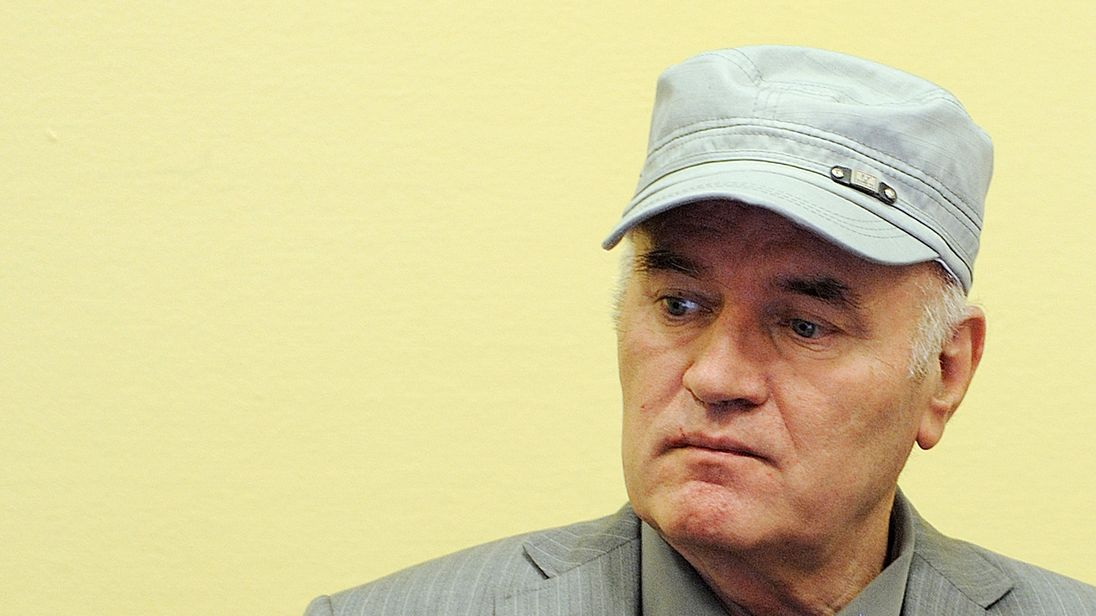 |
| Ratko Mladic oversaw genocide in the worst conflict in Europe since the War |
When a Belgian judge gives his verdict in The Hague this morning, he will be delivering the final judgment on a regime that brutalised a generation in central Europe.
Ratko Mladic was the Butcher
of Bosnia - the general who oversaw the four-year siege of Sarajevo and
massacre in Srebrenica in July 1995.
Under his command, tens of
thousands were slaughtered.
For a time he was the
world's most wanted man, but as much as the world condemned him as a war
criminal, his supporters feted him as the defender of Bosnian-Serb interests.
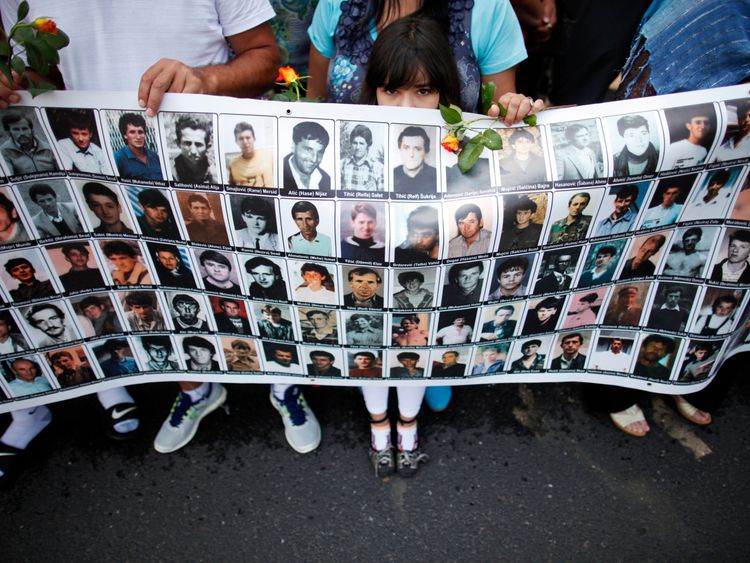 |
| A child holds a poster with portraits of people killed at Srebrenica |
 |
| People dodge snipers during the siege of Sarajevo, which killed more than 10,000 |
For years, they refused to
believe the allegations of genocide.
It was only once a video was
discovered in 2005 showing the execution of six young Bosnian Muslims outside
Srebrenica that the doubts started to fade.
Mladic went on the run,
evading capture and living under protection for 16 years.
His family tried to have him
declared dead, falsely claiming they had not seen or heard from him in years.
Brussels insisted Serbia
hand him over if they wanted candidacy for the EU - and the pressure eventually
paid off.
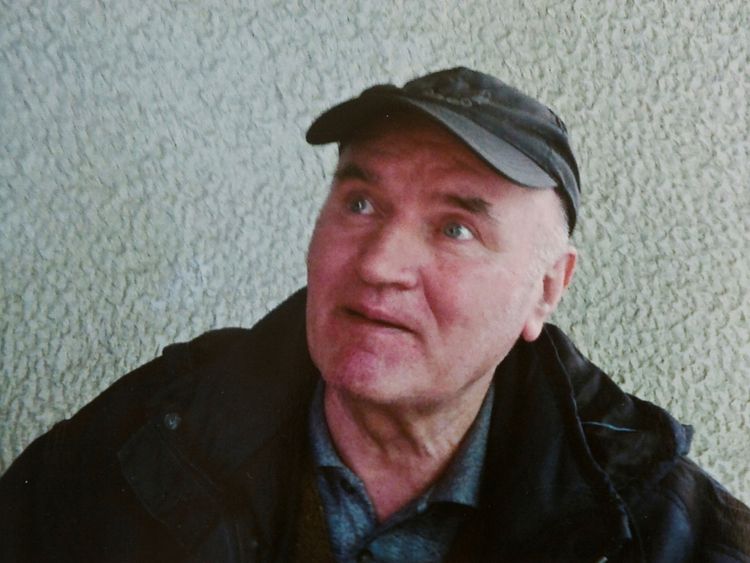 |
Ratko Mladic after his arrest in Belgrade, Serbia, in May 2011
|
Mladic was finally arrested
in the early hours of 26 May 2011. Four cars carrying unmarked security forces
entered a village in northern Serbia while everyone was still asleep.
They found Mladic walking in
the yard of a house belonging to his cousin. He surrendered and was taken to
Belgrade.
Attempts to throw out his
trial on grounds of ill health were rejected. Efforts to delay proceedings were
defeated.
The Butcher is now an
elderly man.
A series of strokes have
aged the 74-year-old. He might be frail of body, but his reputation lives long
and for grim reasons.
The numbers are staggering:
100,000 died in the war; millions were left homeless; 50,000 women were raped.
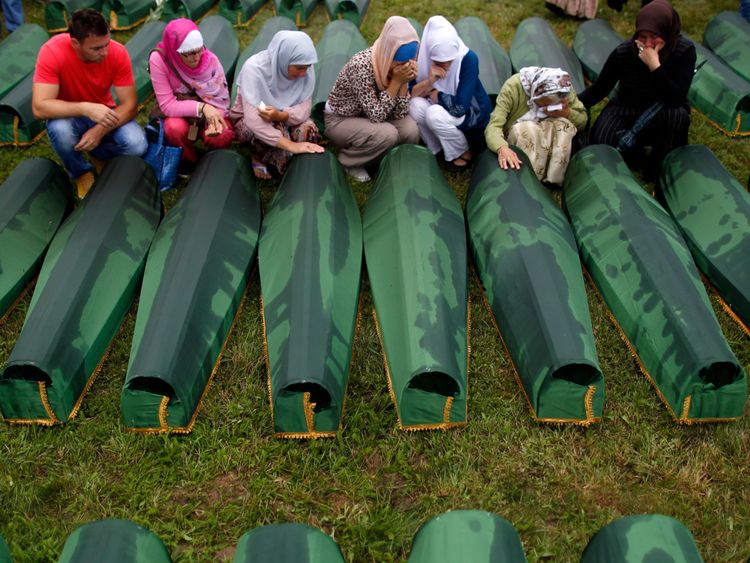 |
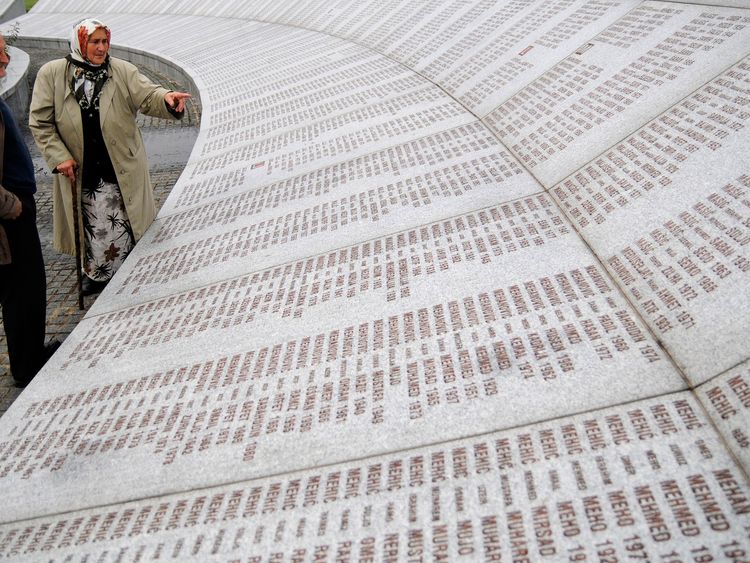
| Another 409 Srebrenica victims were identified in 2013 |
To this day, bones are still discovered in the forests around Srebrenica
Mladic still has his
defenders.
The current mayor of
Srebrenica, a Serb, denies the genocide. He is not alone in that view. What
happened more than 20 years ago still divides communities.
The international tribunal
for the former Yugoslavia in The Hague was set up in 1993 purposely for trying
the crimes committed in Europe's worst conflict since World War Two.
 |
Mladic's is the only verdict
left for the court to deliver.
It will close next month,
after almost a quarter of a decade of work, 5,000 witnesses, 11,000 trial days,
2.5 million sheets of evidence and 83 convictions - Mladic's will be the 84th
and final.
Some bemoan it for being too
lenient, others dismiss it as an arm of NATO.
Judicially though, it has
done its job. It has painstakingly put away those guilty of gross murder,
allowing Europe to put behind it a dark period of recent history.
Many of Mladic's victims and
their families have travelled to The Hague to hear today's verdict.
It will no doubt resurrect
unwelcome memories for them, but two decades on they will get the justice they
must have never thought possible.
.
.
Gossip Gazer
+2348063219792
princejv2@yahoo.com
Comments